News tips and press releases may be sent
to editor at hollywoodinvestigator.com.
All submissions become property of the Hollywood Investigator and
deemed for publication without compensation unless otherwise
requested. Name and contact information only withheld upon request.
Prospective reporters should research our
Bookstore.
by Thomas M. Sipos, managing editor [October 1, 2026]
[HollywoodInvestigator.com] For the 23rd year in a row, the Hollywood Investigator is
happy to announce the winners of its
Tabloid Witch Awards horror
film contest. Winning films came from Canada, France, Mexico,
Portugal, Spain, Switzerland, the United Kingdom and the United
States.
A total of 292 films were entered this year, with only a little
over 5%
winning an award. In selecting winners, films were assessed for
originality, technical mastery, acting, thematic depth, aesthetics
(how well the technical aspects supported the film's story,
characters, and themes), and entertainment value.
In the Tabloid Witch's first few years (beginning in 2004), we
were besieged with zombie films. But lately, zombies have been far
fewer (though they never seem to entirely go away). Influencers remained a popular theme. Surrealism was
also popular among this year's entries. And AI debuted as a new
potential monster this year.
And now these are 2026's Tabloid Witch Award winning films:
* Best Horror Feature:
Ding, Dong, Die!
Three teenage girls (looking to be in their
twenties) conjure a demon on Halloween night. What could go wrong?
Said demon possesses one of the girls and attacks the rest. Okay,
what did they expect?
Actually, it’s not that simple. Not everything is as it seems.
Ding, Dong, Die! surreptitiously lays
clues that will prove important at the end, springing final
revelations in the style of such films as
The Sixth Sense and
Saw. Indeed, Ding, Dong, Die!
borrows from many of horror's best films.
In the style of
Halloween, the story unfolds slowly, taking time to
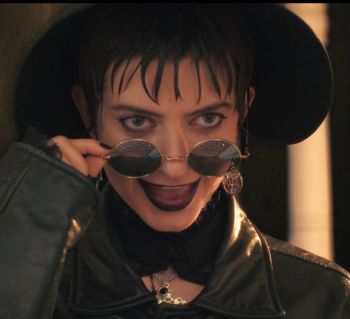
establish the characters and their relationships. The goth girl,
Lilith (Heather Lobban) bears similarities to her counterparts in
both Beetlejuice and
The Craft. And the demon-possessed girl, Ally (Camille
Blott), seems straight out of
Evil Dead in her energetic violence, blood and bile
secretions, hoarse voice, and black comedy bon mots.
That said, Ding, Dong, Die!
is its own thing. Lilith will not be mistaken for her goth
counterparts in other films. Ally is a virgin, but quite different
from Laurie Strode. The third girl, Ramona (Honor Spencer), is the
cynic. She only tolerates Lilith because they're both friends with
Ally.
Actually, Ramona is a bit incongruent. She mocks Lilith's beliefs,
goth jewelry and black clothes, yet she herself wears a skull ring
and spiderweb bracelets. So Ramona also dresses a bit goth. Since
she's not, I'm guessing she's supposed to be a "heavy metal
chick," but it's never stated. Either way, the film might have
tried to differentiate her more clearly, or at least had Lilith
remark about Ramona's jewelry when insulted by her.
But these are quibbles. Overall, Ding, Dong,
Die! makes for excellent supernatural Halloween horror. The
cinematography (credited to two DPs, Vasilis Glezakos and
Pipardgorn Sombunnavanid) is sharp, colorful, beautiful, and
effectively uses light and shadows for a spooky atmosphere. At
times the music is jarring, but never overwhelming, always
supporting the events on screen. Unsurprising. Composer Tommy
Haynes describes his philosophy on IMDb: “Nothing is more
important than supporting the narrative of the picture as a story
unfolds.” Which is what film music should do.
Despite some slow periods, the editing and screen wipes mostly
keep the story moving at a brisk pace. Sound design works well
with the music to support on screen events. The interplay between
the three actresses flows naturally, a credit to both the
actresses and their director (and writer) Rui Martins.
* Best Horror Documentary:
Like Michael
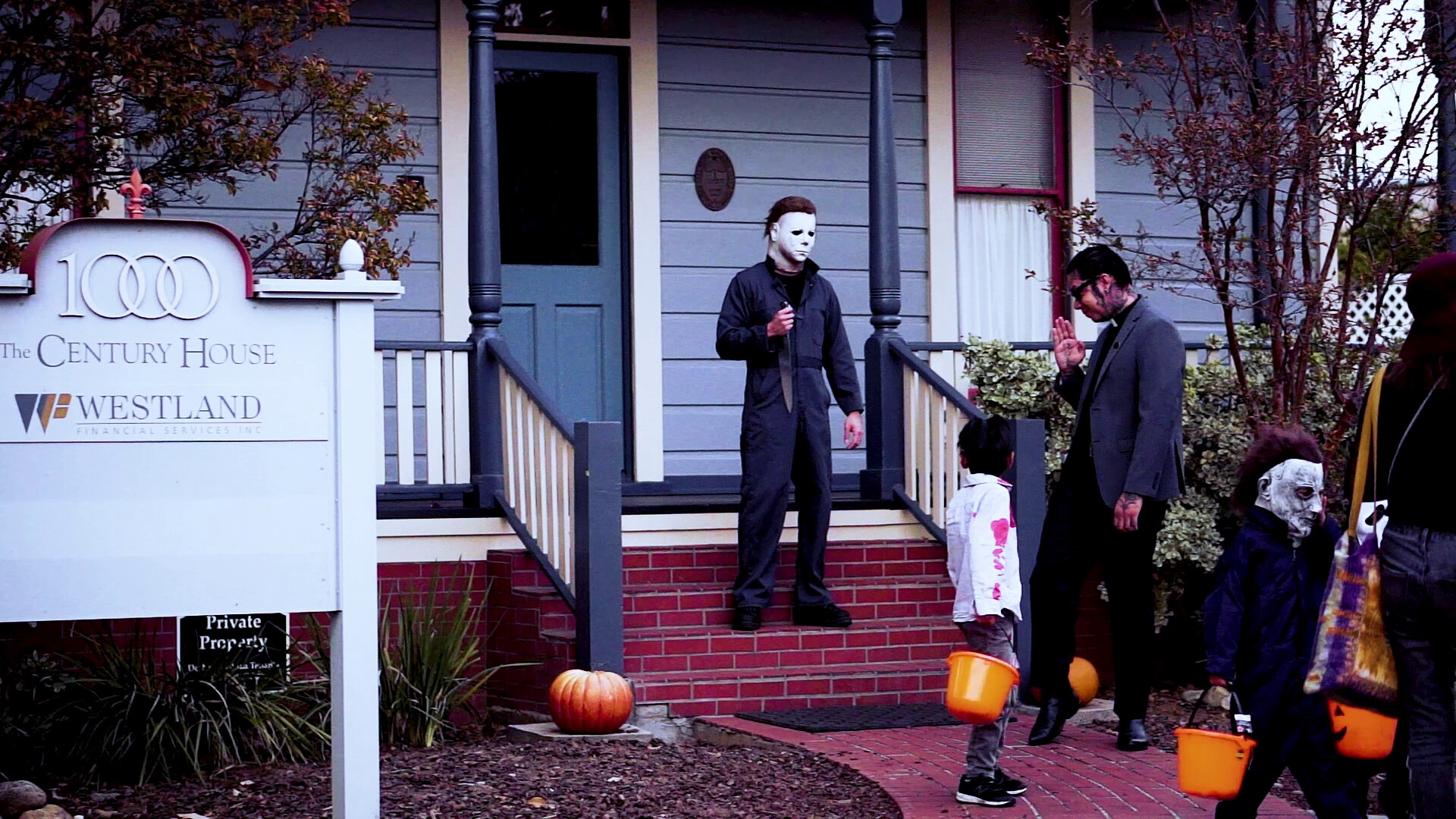
Although set in the fictitious town of Haddonfield, Illinois,
Halloween, was shot in South Pasadena, California. The
original “Loomer house” is still there. And every Halloween, Myers
groupies descend on South Pasadena to visit the Loomer house,
celebrating the holiday by seeking out their favorite serial
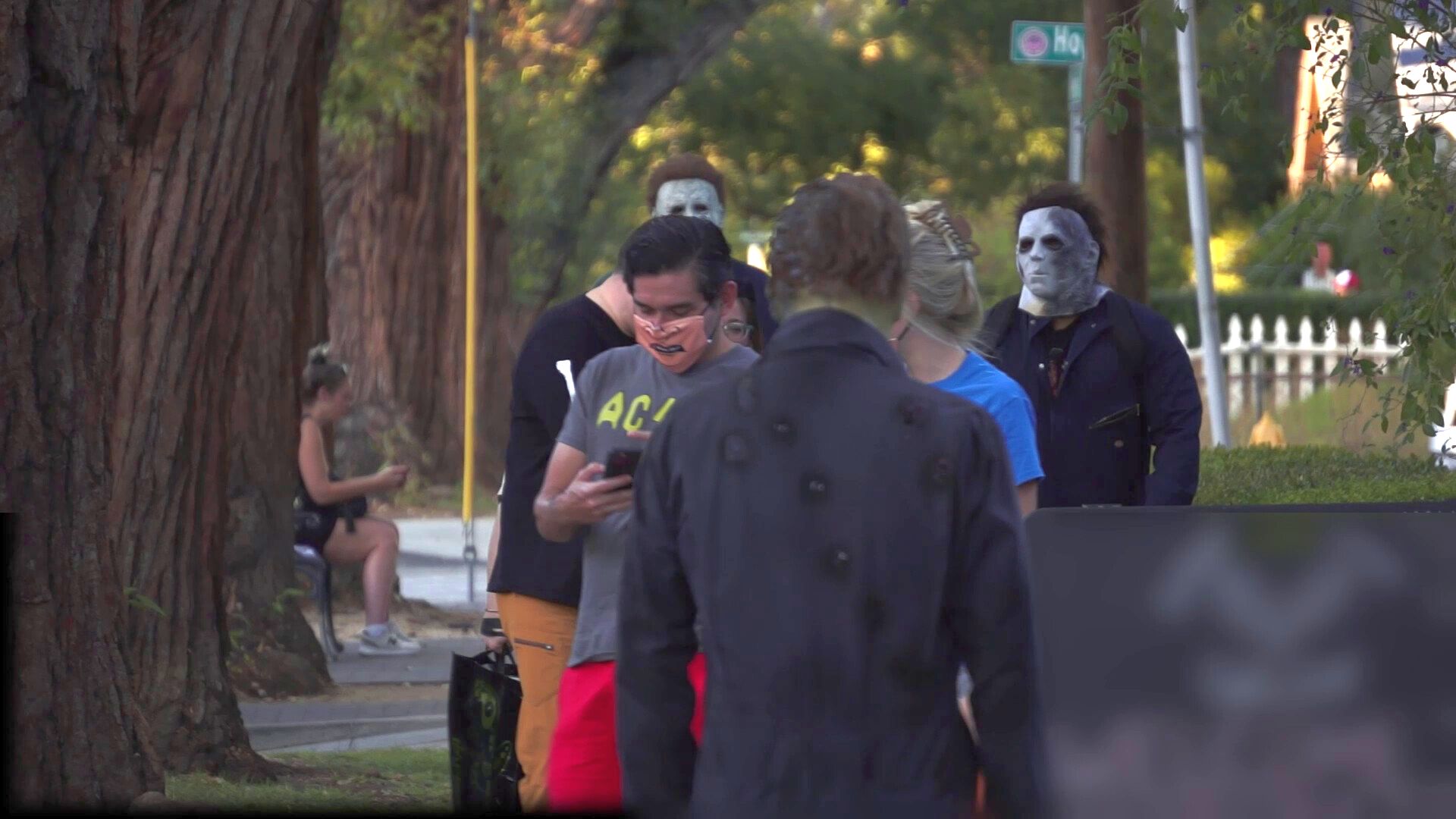
killer. And he is everywhere. Or at least, his cosplay clones are
everywhere.
Many fans saw
Halloween upon its initial release. They grew up watching and
rewatching the film every year (one woman claims to watch it
several times a month). These older fans bring their kids. Others
are young newbies. And some travel across the ocean to spend their
Halloween in South Pasadena.
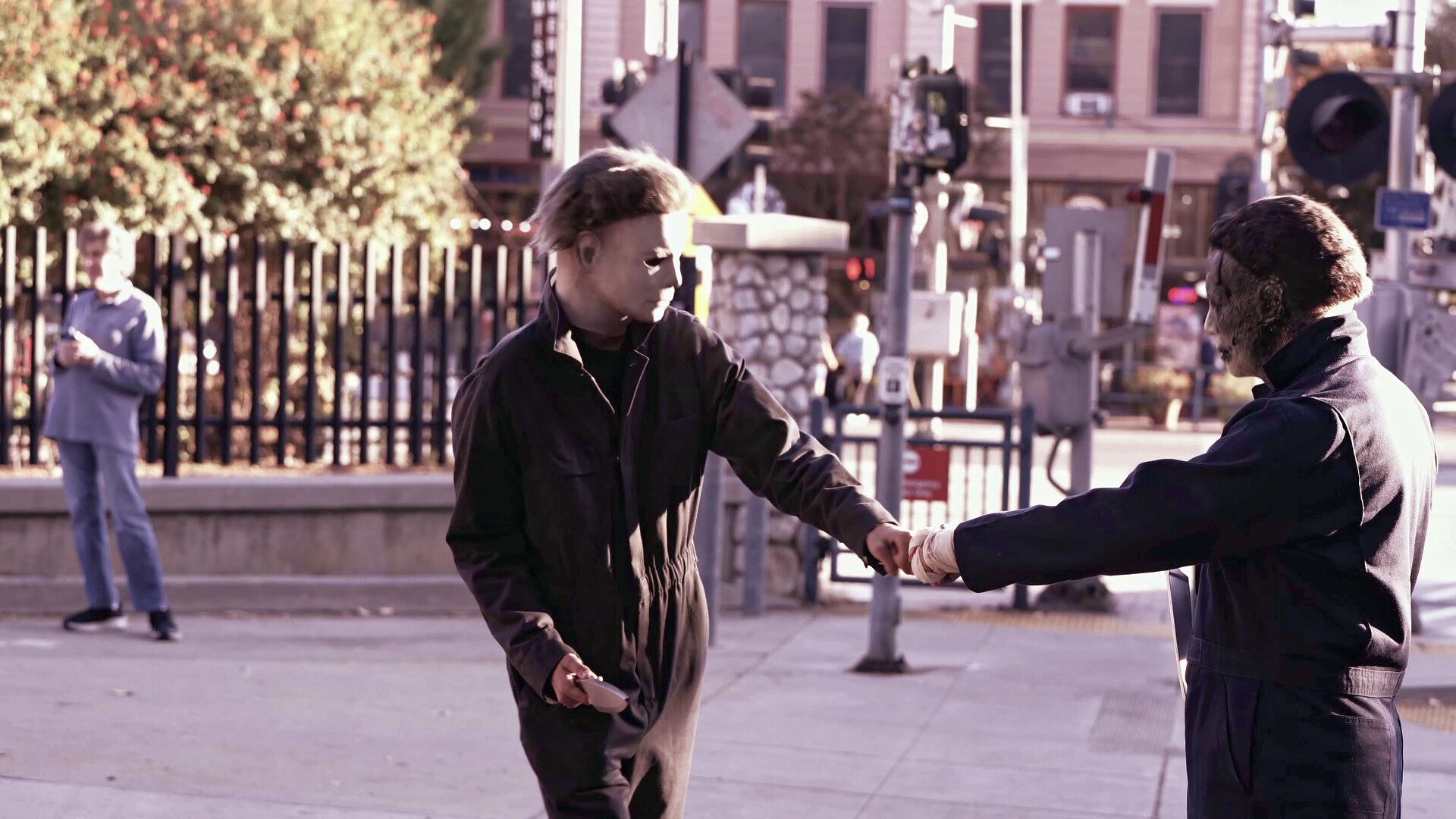
In Like Michael, Aaron Matthew Migdon
records this pop culture phenomena. He captures streets full of
cosplay actors dressed in Myers’s green overalls and white William
Shatner mask, and wielding Myers’s classic big kitchen knife. He
interviews the fans, show them at their playacting, and
successfully captures the love and spirit of the Halloween season
and the serial killer who made the season that much more special.
* Best Dramatic Horror
Short: Not Every Death Is Celebrated
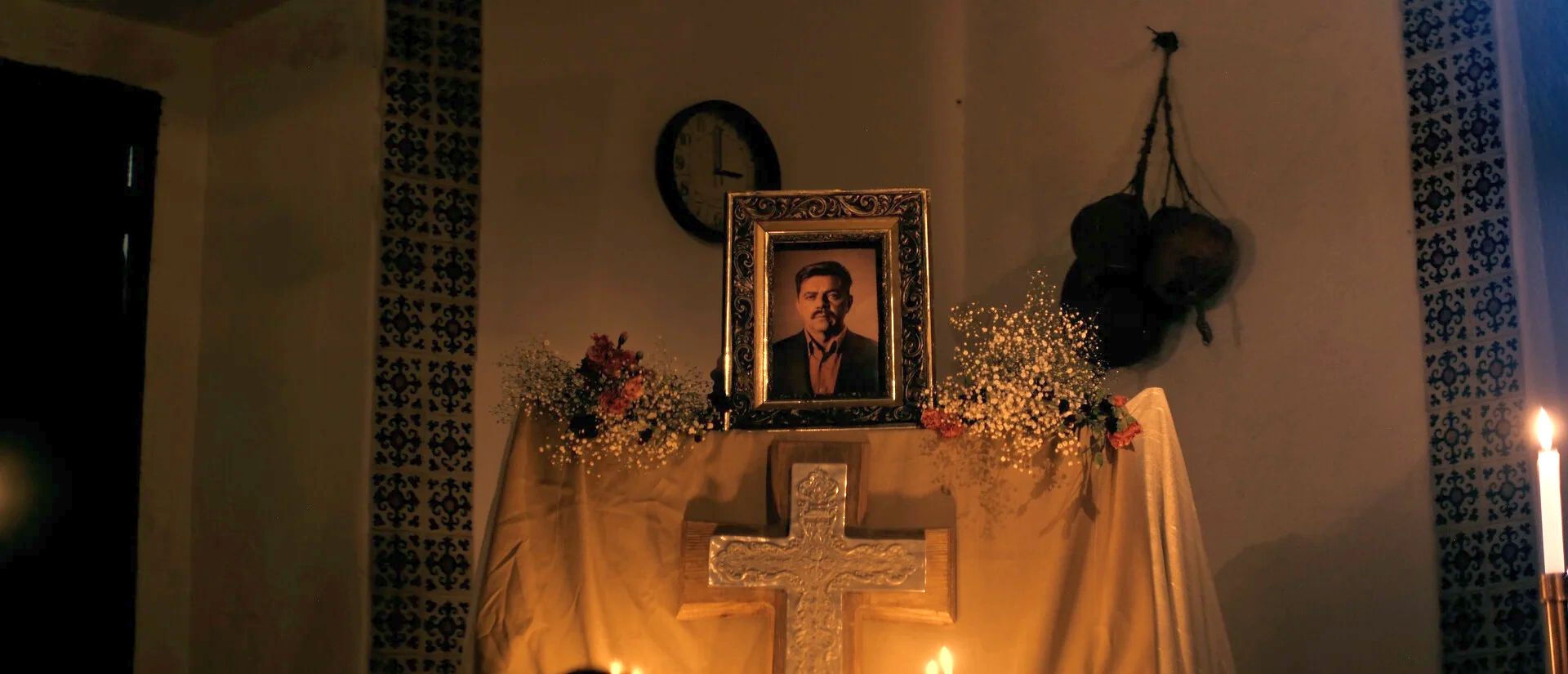
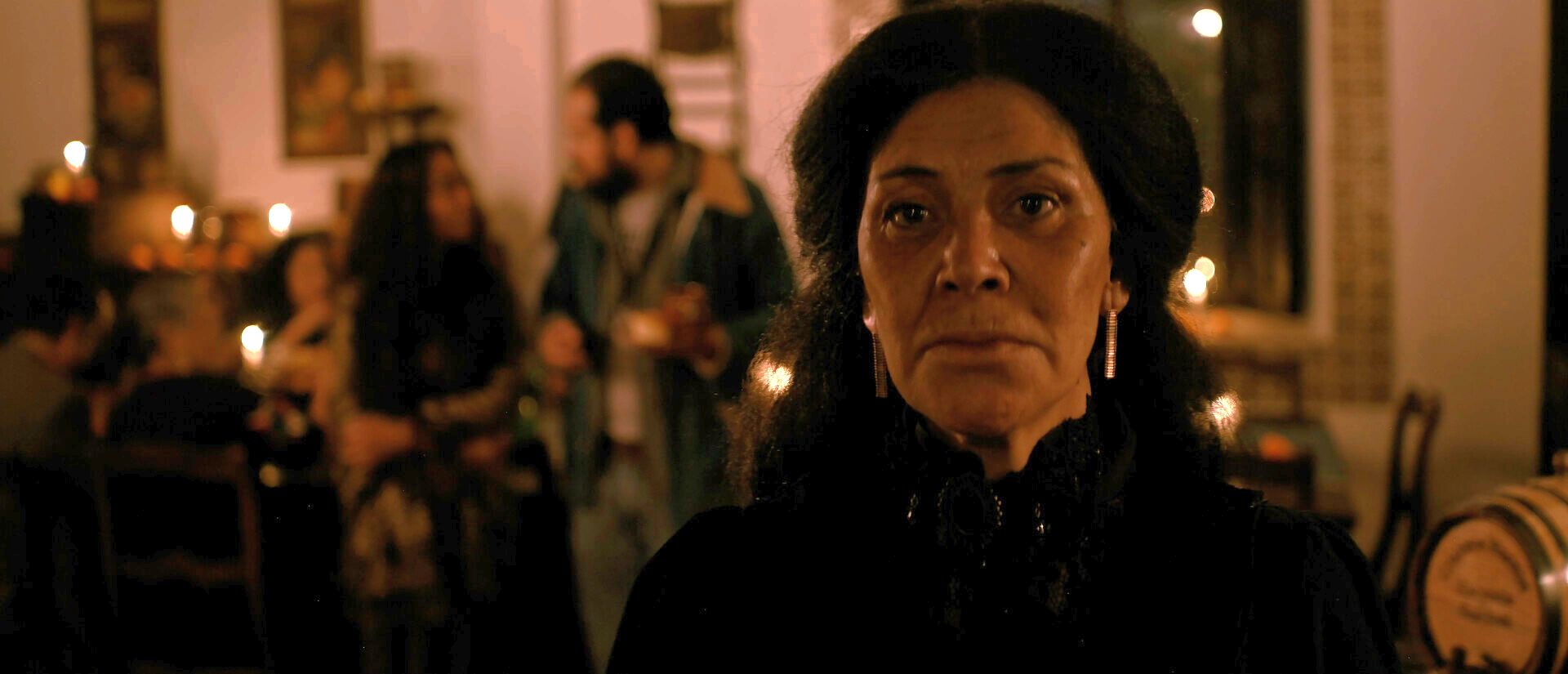
Loreto (Melannie Loza) places a broken mug before a shrine to her
dead father, Rodrigo (Jorge Prieto). Enter her grieving mother,
Veronica (Paty Lupercio), who accuses Loreto of murdering Rodrigo.
Well, Loreta is carrying a black cat. Is she a witch?
After that strong opening hook, Not Every
Death is Celebrated (aka No A Todos
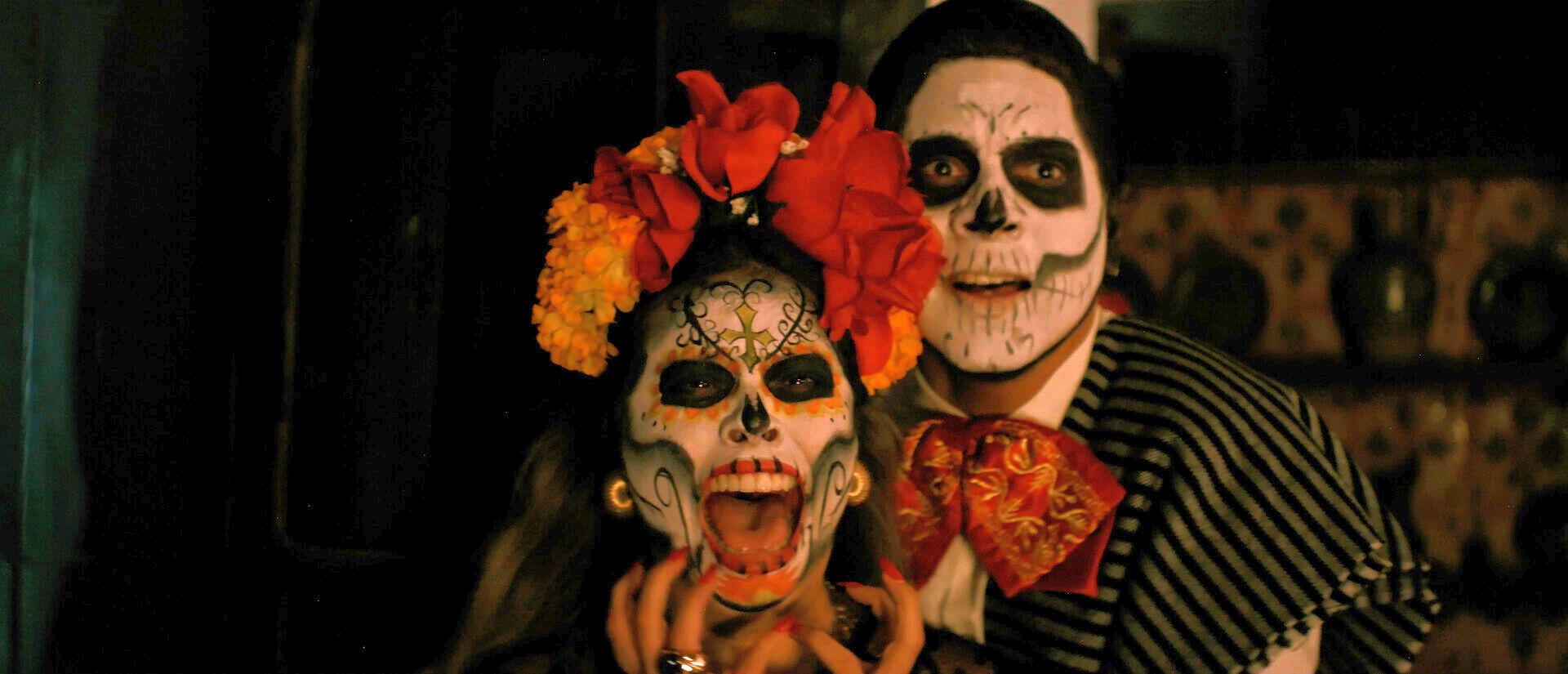
Los Muertos se les Festeja) cuts to a Day of the Dead
celebration in Veronica’s house. Apparently in Mexico (this is a
Mexican film) people celebrate their dead loved ones with
shrines and parties during Day of the Dead. Thus the film's
curious (to an Anglo audience) title. In the United States, the
meaning of the title might more accurately be translated
as Not Every Death Is Mourned.
Veronica’s party begins as a languid, cheerful event, children
scampering about, guests arriving in costume, drooling over the
chocolate, reminiscing (and gossiping) about Rodrigo. Veronica
smiles for her guests, but tension mounts, then emotions explode,
and finally the supernatural intrudes. In a big way. The final twist
is shocking and unexpected, yet it is no cheat; it flows naturally
from pre-established events.
The film's beautiful cinematography emphasizes warm hues that,
together with soft guitar tunes, create an ambiance of serenity,
belying the domestic turmoils churning beneath the facade of close
familial ties. Marisol (Lupita Ibarra), Rodrigo's sister who
claims psychic powers, accuses Loreto of being a witch. Veronica
accuses Marisol of the same. Then a camera trick heralds the
arrival of something demonic and chaos ensues, with shocking and
gruesome special effects.
An excellent cast and script create characters with emotional
depth. Veronica is over-the-top hysterical, but that's in keeping
with her character and the drama's extreme turn of events. Dialog
is terse and efficient, saying no more than needed to establish
character or propel a story that is intriguing, entertaining, full
of surprises and scares.
On a minor note, even the
subtitles are excellent. The letters are large, distinct from
background colors, and stay onscreen long enough to read. And it
helps that the dialog kept to essentials and thus to a minimum of
words. This seems a small thing, but it enhances enjoyment by
foreign audiences who prefer to watch rather than
read a film. A film is not a book.
Apart from its technical beauty and entertainment value,
Not Every Death Is Celebrated carries
great thematic depth, touching on issues such as domestic abuse,
denial, and patricide.
Written and directed by Luis "Yayo" Angel Villa Meza.
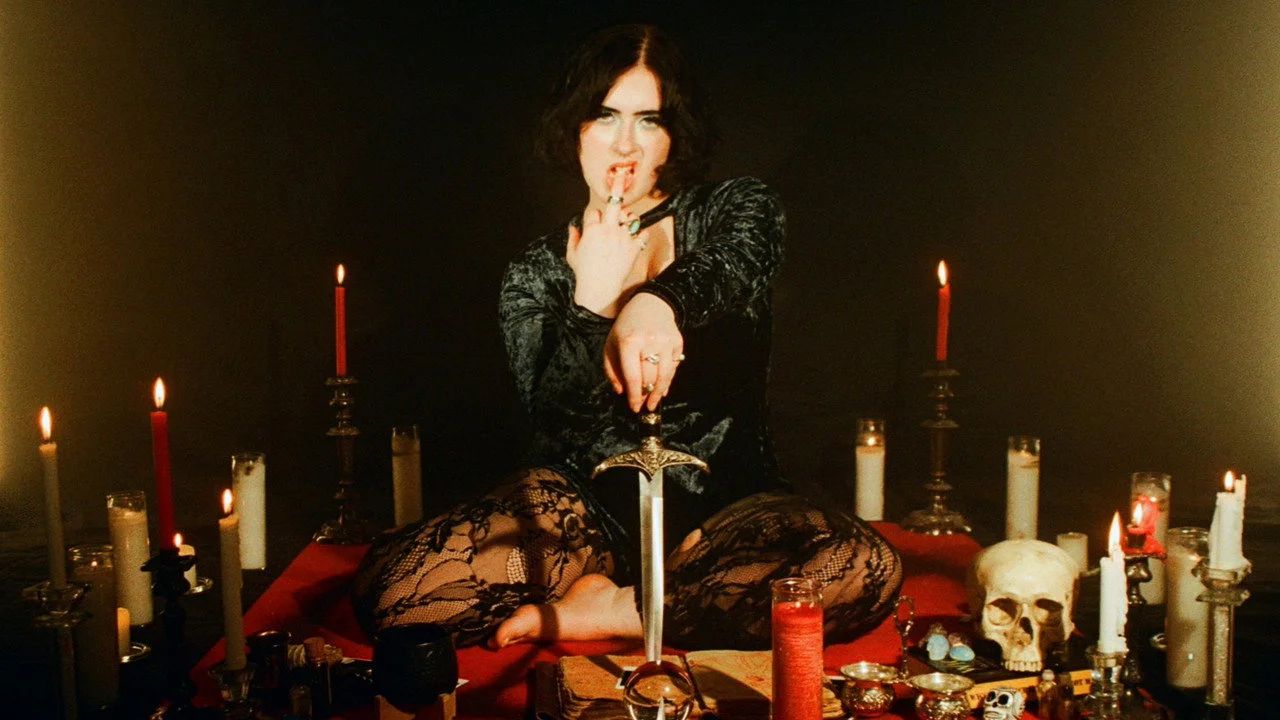
* Best Comedic Horror Short: Are You
a Human Being?
Jean-Michel (Jimmy Conchou) has trouble logging into a website. He
can't get past the Captcha to prove that he's not a robot. He
phones for a repair technician. But the technician can't find
anything wrong with the computer. He concludes that the only
possible reason Jean-Michel can't bypass the Captcha is because he
is a robot.
"No one ever told you?" the technician asks.
Now Jean-Michel faces an existential crisis. What does he do? How
will he tell his wife, Lucie (Alice Abraham)? "She doesn't
know?" asks the technician? Apparently not.
Lucie is a perfect woman. She knows everything. She is always
correct and punctual and reliable. But she lacks strong emotions.
No highs or lows, as she tells her therapist. Is Lucie also
a robot? Has Jean-Michel been married to a robot all along? Would
that alleviate or compound his existential crisis?
The French are big on existentialism, so it's not surprising that
Are You a Human Being? is a
French/Swiss film. But Are You a Human
Being? is also a comedy, as indicated by the bright and
colorful production design, the whimsical music, and the
characters' carefree mannerisms and exaggerated mugging.
AI themed horror films were plentiful this year, vilifying or
cautioning against AI. (Ironically, films created by AI
were even more plentiful this year.) Are You
a Human Being? ends on a note that's playful and dark. An
ending that's funny, in a queasy sort of way. And
thought-provoking, in an existential sense.
* Best Avant-Garde Horror Film:
Living Dolls
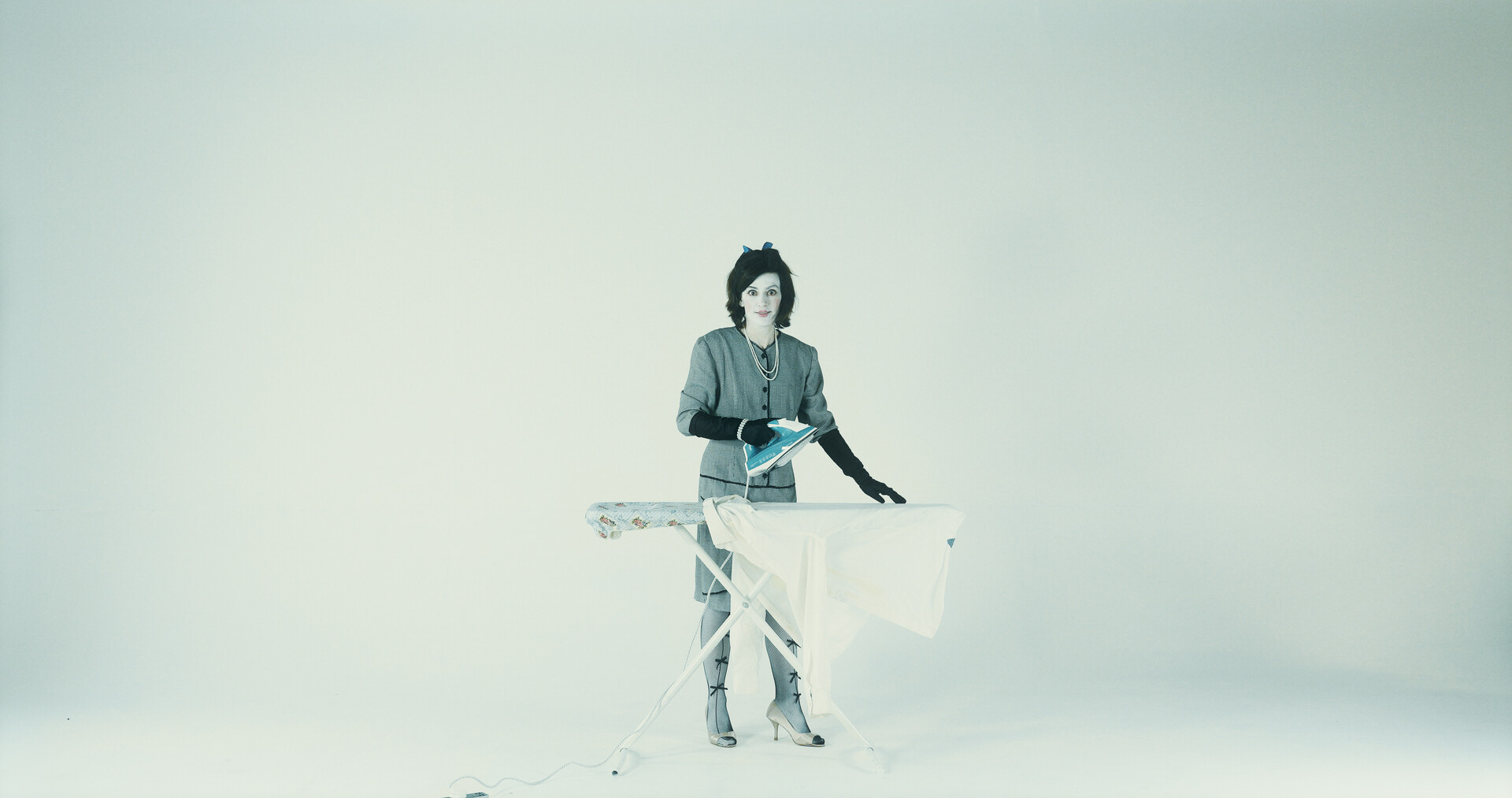
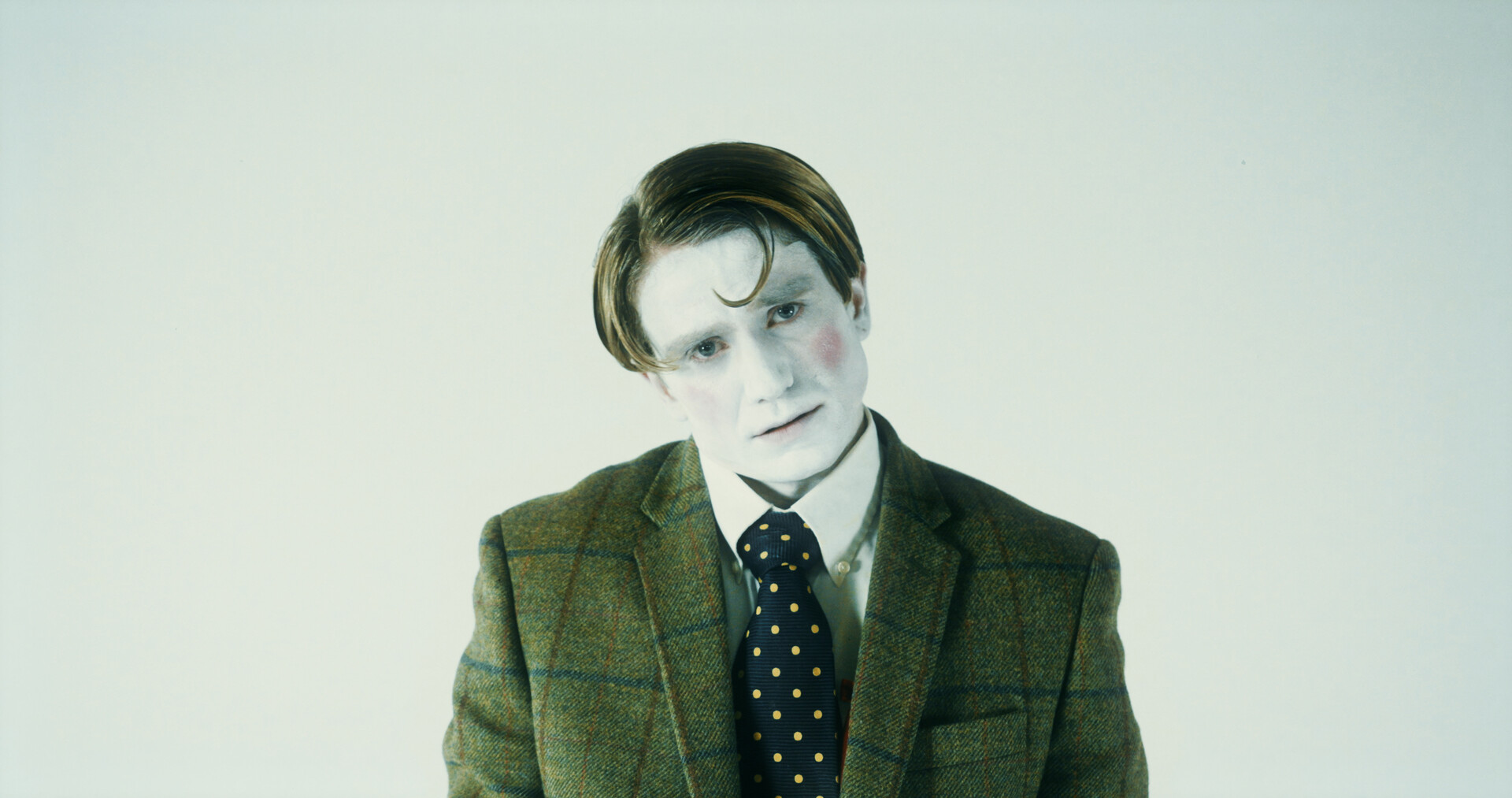
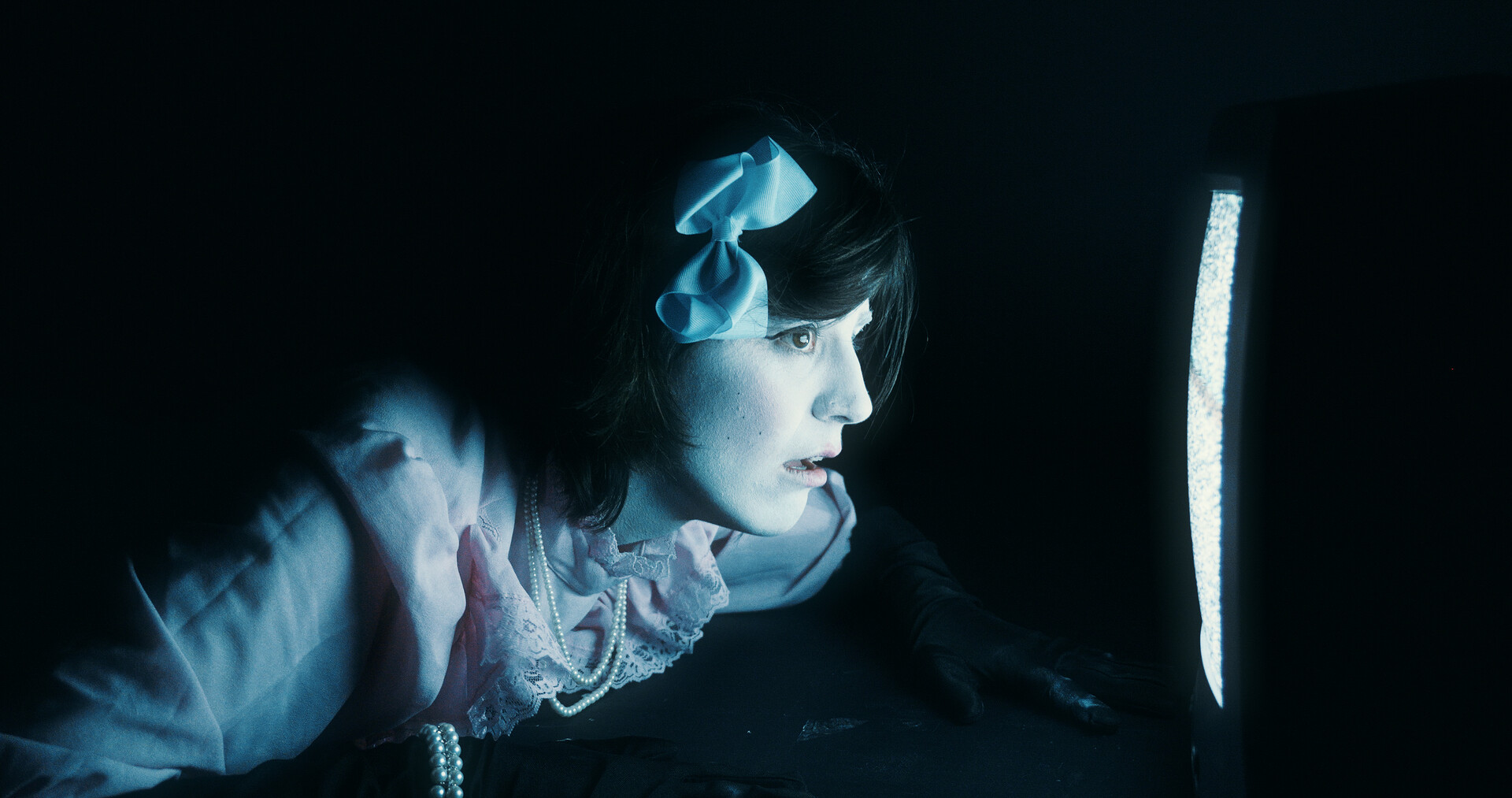
“Dolly” (Laurie Dentie) is a full-sized doll who wears traditional
1950s housewife garb while she does her housewife chores. She
yearns for a perfect 1950s spouse. But when she pins a red ribbon
on “Dollman” (Alfie Jameson), he not only comes to life, but flees
from her assertive demands for love. Crying in despair, Dolly
tracks Dollman through an old analog TV set to his “man cave”
apartment, and compels him to return. Turning him into her perfect
doll mate. She’s happy. He, not so much.
Living Dolls tells its tale largely
through symbolism. The set design is sparse, depicting only
objects related to its theme, which seems to be a woman’s
obsessive search for the perfect home and spouse. Clothes and
mannerisms reflect the 1950s, which is still regarded as a decade
that idealized perfect, white-picket-fence family life. (Although
there is no picket fence outside of a dollhouse in
Living Dolls.)
Director Dimitris Vrouvas describes his film thusly: “Living
Dolls explores themes of isolation, obsession, and the
human need for connection. Dolly’s pursuit of life and affection
highlights the dangers of perfectionism, as her inability to
accept imperfection leads her to manipulate and destroy those
around her. The film touches on the haunting nature of the life,
questioning what it means to be alive and the lengths one might go
to in order to experience genuine human interaction, yet her
actions reveal the dangers of obsessive and toxic behavior. The
cycle of life, death, and rebirth is played out in a macabre and
surreal way, leaving the audience to consider what it means to
truly live and love.”
Dimitris is correct in saying that Living
Dolls is macabre and surreal. Macabre, in that Dolly’s
creepy smile and sudden fast-motion crawl from the dark evoke both
J-horror and
Insidious. Surreal, in the look of production designer
Carolina Rodrigues’s sparse white set, whose emotional power is
heightened by the camera’s wide shots. Production design and
cinematography cooperate to emphasize both the emptiness of the
set and of Dolly’s life. And thus her desperation to fill this
void with a perfect husband’s love. Ben Casey’s music, similarly
sparse and creepy, also contributes to the film’s macabre and
surreal ambiance.
Overall, Living Dolls is a
beautifully creepy piece of avant-garde horror.
* Best Animated Horror Film:
The Hunt
Three soldiers patrol the woods in search of zombies. Or monsters.
Or … well, we’re not sure what they’re up against. When a soldier
is killed, a creature bursts from his body. Was it always there,
or did the soldier transform into it after death? Another headless
soldier goes on the attack after being decapitated.
The Hunt is an enigmatic film. The uniforms and weapons
evoke the Vietnam War, but the forest resembles something from
North America or Europe. There is no dialog. The soldiers never
converse, so nothing is explained. The Hunt seems to
portray the world-weary cynicism and gallows humor of the Vietnam
conflict in another era.
As filmmaker Diogo Costa explains it: “Set in an alternate
future during a never-ending war, The Hunt explores the
nature of conflict and how it turns humans into soulless monsters
whose sole purpose is to perpetuate that same conflict.”
The Hunt is an attractive piece of animation, its drawings
comic book in style (or is the correct modern term “graphic
novel”?). Either way, The Hunt is beautifully drawn,
dramatically compelling, with a thought-provoking theme.
* Best Trash Horror Film: Threefold
Scarlette (Sophia Keil) is an aging Gen Z barhopper. By day she
works as ... well, I'm not sure if she works at anything. She has
no apparent source of income. All she ever does is hang out with
her best friend, Jess (Miranda Kelly), at bars, at their
apartments, and at streets, parks, and subways.
Oh, and Scarlette also practices black magic to destroy those she
thinks deserve it. The results are ugly, gory, cringe-worthy, and
scatological. Like when she gives a drag queen Influencer diarrhea
during his (her?) live stream.
Despite that, we're drawn into Scarlette's spiritual journey down
the drainhole of life. We're compelled to watch as one is
compelled to watch an exceptionally gruesome accident. I even felt
a bit sorry for her when she got her comeuppance (though not to
the point that I regretted it), in what is a startingly effective
final scene. And imaginative as to how it was achieved on such a
low budget.
Threefold is why we have a trash
horror award. It's not a pretty film, visually or content wise.
Its production values are rough. Sound levels are uneven. The
camera appears to have been mostly handheld, using whatever
lighting was available at the scene. (I wouldn't be surprised if
Threefold was shot on a cell phone.)
"Special" make-up effects are pretty much what was being done
sixty years ago. And despite its short 62 minutes, some scenes
still feel overlong and self-indulgent.
Yet as often happens with trash horror, these rough elements
enhance the story, lending it a gritty authenticity. I suspect
Threefold was shot guerrilla style,
without film permits, including the shots on the train. With
Threefold, Danielle Francis evokes
the sordid works of such New York trash horror sleazemeisters as
Frank Henenlotter (Basket
Case,
Frankenhooker) and Tim Kincaid (Necropolis,
Breeders). Her film might yet follow them to become a trash
horror cult classic.
* Best Horror Music Video: Stella
Tenebras
The problem with AI generated films is
that its human characters look too realistic to be enjoyed as
cartoon characters, yet not realistic enough to pass as real
people. A discomforting gray zone that the Japanese roboticist
Masahiro Mori termed bukimi no tani (uncanny valley). It
was 1970 and Mori was referring to robots, but bukimi no tani
can as easily apply to human AI characters. And it's why AI has
difficulty competing with human actors. AI is its own thing,
creating its own weirdly surreal "look."
In Stella Tenebras (Latin for Star of
Darkness), Mark Von Bismark puts AI's surreal quality to
appropriate use, creating a Lovecraft inspired music video. Von
Bismark describes his work as "a waking nightmare -- dark,
oppressive, and deliberately unsettling -- where shadows conceal
things that should never be seen and the boundaries between
reality and nightmare begin to collapse ... [resulting in] the
terrifying realization that humanity may be insignificant in the
face of forces older than time."
His imagery does indeed evoke several of Lovecraft's stories about
men who discover the ruins of advanced prehistoric civilizations.
The buildings' gargantuan sizes, the occult symbols, the black and
white and shades of gray, all contribute to
Stella Tenebras's atmosphere of oppressive fatalism and
cosmic horror.
But I suspect that Lovecraft isn't the
only influence. Stella Tenebras
is for the band Mater Tenebrarum (Latin for Mother of Darkness),
which was the name of one of Three Sisters in Dario Argento's
Inferno. And so Argento's supernatural horror trilogy is
likely another influence (though it's highly ironic that a
director famous for his use of bright, vibrant, primary colors
should influence a gloomy black & white production).
As for the music, Von Bismark describes its genre as "crushing
gothic doom," which his images do a nice job of aesthetically
supporting and complementing.
* Honorable Mention
The Honorable Mention prizes, like
the "Best ... Film" prizes, are shared by the film's writer and
director.
Honorable Mentions are kept few in number, so winning one is a rare honor.
* Amira
Amira (Aroa Haren Varela) is fortunate to have found a place at a
finishing school for orphans, one that trains its wards in
classical music. Her teacher (Ruth Diaz) stresses that it's
important for them to master their craft, lest they be expelled.
Yet Amira wants to leave the orphanage and visit the big city
she's only heard about. Little does she know what really awaits
outside.
We don't initially know when Amira is
set, but we seem to be in an earlier period. Perhaps around 1900
or even a century earlier. In some ways the setting evokes
La Residencia (aka
The House That Screamed), another Spanish period piece with a
similar academic setting. We have the same stifling atmosphere
amid gentile decor. Unlike
La Residencia, there is no slasher afoot and no abuse or
violence among the girls. Instead, the threat is more surreal and
otherworldly.
Amira is a beautifully photographed film.
Like
Not Every Death Is Celebrated, the cinematography
emphasizes dim lighting and golden-brown hues, lulling us with a
misleading warmth during its slow burn story. The soft focus is
both comforting and vaguely claustrophobia, making things harder
to see. Which is perhaps intentionally frustrating when a student fails to perform well
on stage and dies in unexplained fashion. The audience remains
hidden in darkness. The camera's angles and closeups show us the
student's bizarre death, but not by whom or how it was brought
about.
Despite not being wholly original, Amira's
ending is shockingly unexpected. (I could cite
Amira's obvious influence, but that
would spoil its ending, so I won't.) Production values are
excellent across the board, including the actors, production
design, and makeup and visual effects. A first rate effort, and
highly entertaining.
* The Awake
Mike (Gary Anthony Stennette) is unnerved to discover that his
tattoos have disappeared overnight. His mother doesn't even
remember him having tattoos. Then he wakes up. It was all a dream.
Only now he finds himself in bed beside a stranger who claims to
be his wife (Mari Cielo Pajares). Then things turn still weirder.
In Fox TV's Werewolf, Alamo Joe said,
"When the world is not as our minds believe, then we are
living in a nightmare." That's one of the best definitions of
horror that I've ever heard.
The Awake exemplifies that conceit. The
Awake is also what I call "minimalist horror." Quiet,
creepy horror. It doesn't rely on gore or monsters. When Mike
discovers that his tattoos are just gone, he is frightened. It
seems a small thing, but think about it. If your reality had
mysteriously changed, if you looked up and your bedroom wall was
missing, or the familiar building outside your window had become a
train station overnight, you'd be terrified too.
Apart from its intriguing premise, The Awake's
execution is excellent. Production values are slick. The stark,
modernist production design supports the story's minimalism.
Editing is similarly sparse, without padding, moving the story at
a brisk pace. Stennette's performance strikes the right balance
between a man trying to remain calm and rationale, while
suppressing a rising panic as his reality crumbles.
The result is a film that's both entertaining and
Twilight Zone scary.
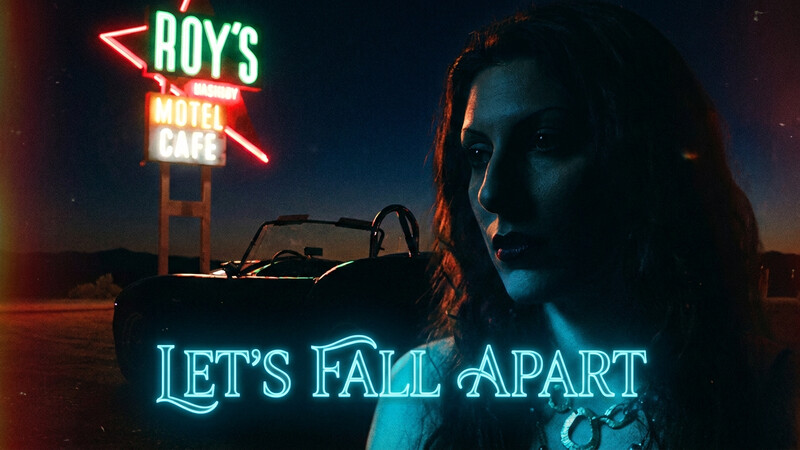
* Let's Fall Apart
Jerry (Darren O'Brien) doesn't get much sleep. He keeps dreaming
of a mysterious temptress who seduces him at night. Then a woman
(Lily Magdesyan) approaches him at an all night diner in the
middle of a desert. This time it's real. Is she a witch, a
succubus, the woman of his dreams? Will she be his destruction or
salvation? Or both?
Let's Fall Apart's greatest strength
is not its story, but its surrealist mood. Its visuals are hazy,
grainy, slightly blurry. Colors are off.
Let's Fall Apart looks to have been shot on 16mm (or even
Super 8mm) film stock that was unsuited to the filming location's
light temperature. The aesthetic impact of these elements is
reinforced by dissolves, color distortions, solarizations, and
creepy imagery (e.g., tarantulas and ... worms?) And the sound,
the music and dialog, is slightly muffled and disembodied, to the
extent that the film uses subtitles.
Thus, both visuals and sound contribute to a surrealism that
supports the story's conceit of a succubus that stalks a man in
his dreams. Of course, it's possible that
Let's Fall Apart was shot on video, and its visuals given a
"film look" in post-production. If so, well done. Either way,
credit Vaughn Jelks III for the cinematography.
The film ends leaving one with a conflicted mood of hopeful
fatalism. As of a man rushing to his destruction, but expecting to
enjoy it.
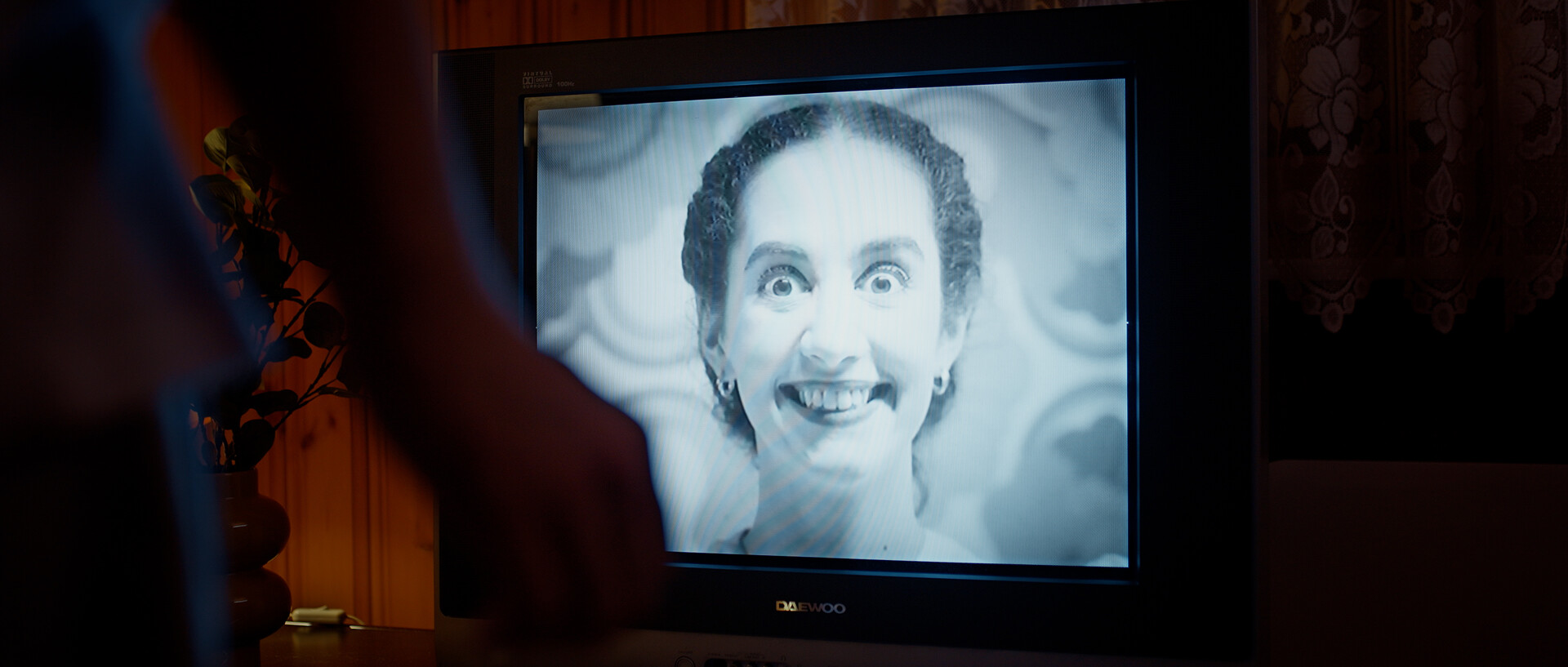
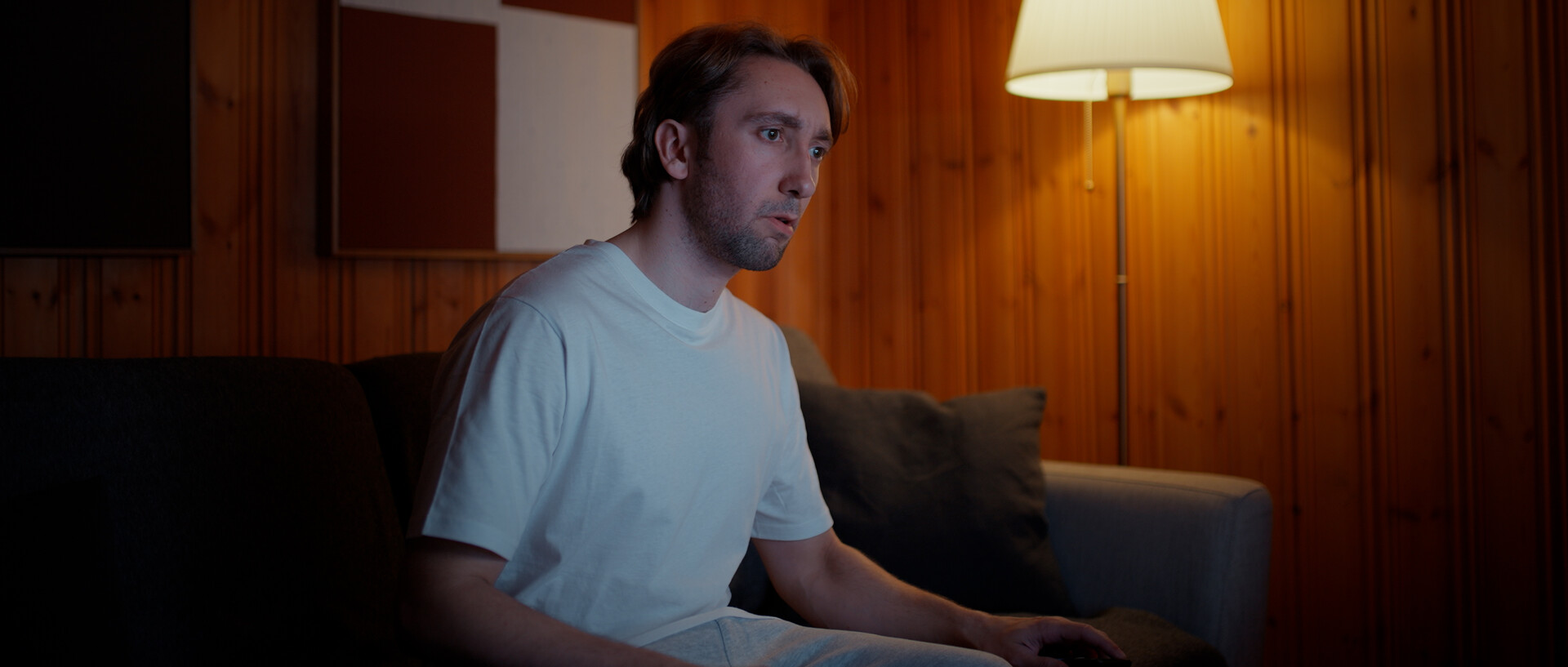
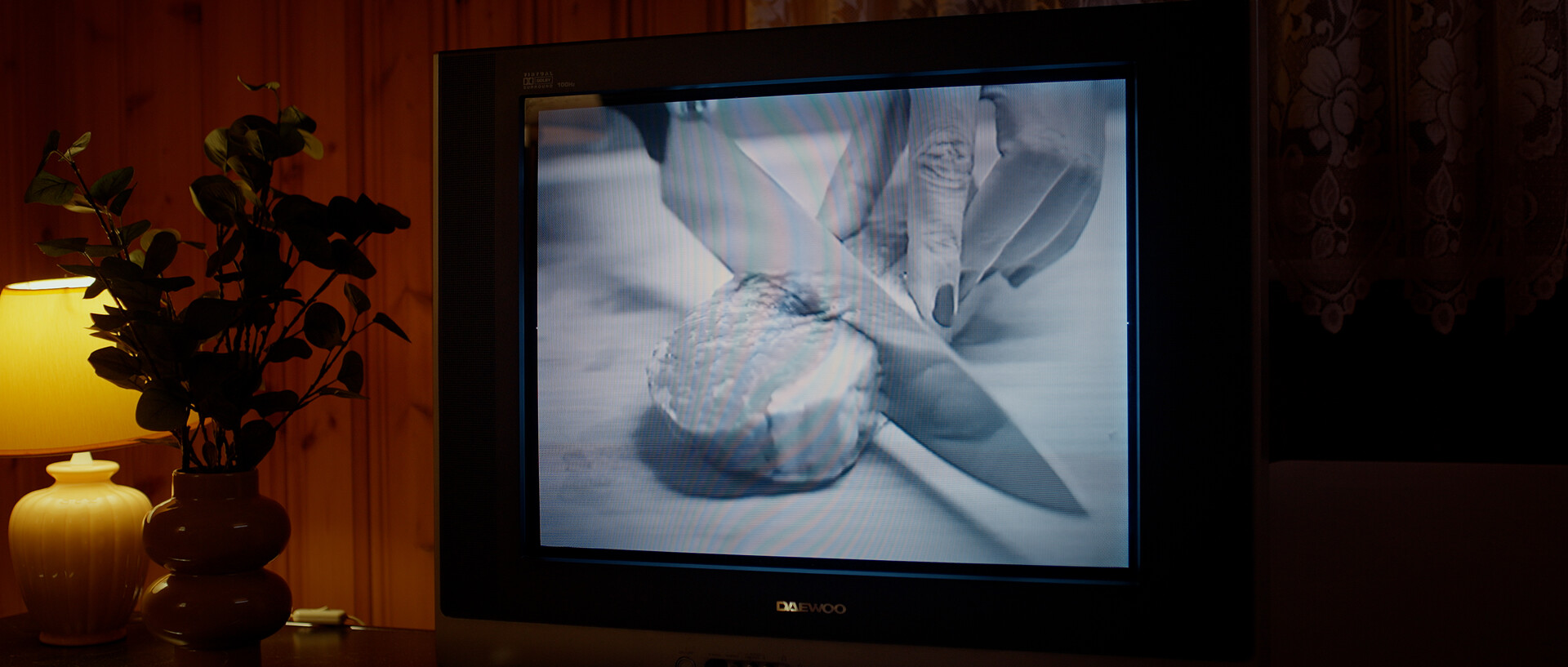
* We'll Be Right Back
David (Liam Wietlisbach) is watching late night TV, when an oddly
old-fashioned, black & white commercial comes on. Tired and
sleepy, he turns off the set. Which turns itself back on.
Apparently insistent that he watch the commercial, featuring a
traditional 1950s homemaker (Valeria Hongler) demonstrating a new
kitchen knife. Who then tells David to kill himself.
Stylistically, We'll Be Right Back
exudes a sort of retro surrealism. Although David is a modern man,
his room has the sort of wood paneling that Americans associate
with the 1970s. The commercial evokes the 1950s. Weirdly
demonic events, both on David's TV and in his room, are connected
by a sort of dream logic. The kind of logic that one feels but
cannot explain.
Liminal
space has been described as space that has a familiar, cheerful
past, but which now feels uncanny. If there's also liminal music,
it would describe the big band music on that TV commercial. You
realize it's supposed to sound happy and peppy, like
the housewife, but it fails to inspire joy. Nor does it help that
it's played at a slower speed than intended. Not so slow that you can be
sure it's the wrong speed, but slow enough to deepen the pitch,
dragging the music like a dying animal. And so repetitive. Like it will
play for eternity.
The muzak they play in Hell.
Using 1950s iconography to creepy effect is nothing new. Nor are
the supernatural events in We'll Be Right
Back especially original. The film's strengths lies in its
execution. Production values are good, including the editing,
which is nicely measured. It takes time when needed to set the
mood and build suspense, while simultaneously maintaining a brisk
pace that avoids padding or boredom. A slow burn that's lean and
fast-paced.
* Additional Winners
Every year we see some bad
actors, some mediocre actors, and some talented actors who do a
professional job. Among the latter are those few who leave an
impression. Who go beyond the job and create a character that
lingers in our minds. This last quality is often the crucial
difference between the winners and the merely talented.
Another consideration is aesthetics. Many films are technically
slick. They are nicely lit, the sound clearly recorded. But if a
film's technical choices also aesthetically support its story,
characters, and themes, then so much the better.
Of
the three lead female roles Ding, Dong, Die!,
Lilith is the most mysterious. And not just because she's Goth.
Lilith travels the widest character arc. She's full of surprises.
Initially snarky and deeply into the occult, she later denies any
belief and reveals herself to be empathetic and vulnerable. Then
she peels another layer and reveals herself to be more evil than
anyone imagined. Then another layer is peeled and she reveals a
past pain which explains her evil, and once more we sympathize.
We last see Lilith once again displaying snarky self-satisfaction,
before she experiences a sudden fearful realization.
Our sympathies toward Lilith might fluctuate with her changing
character revelations, but she is
always interesting, compelling us to wonder and watch.
Heather Lobban wins for Best Dramatic
Actress.
Ring
Ring is a challenging film. Every time I watch it, I
discover new and subtle clues that explain what I just saw, but
I'm still left mystified.
The film opens with Lorenz looking to buy a -- I guess you'd call
it a spirit phone? -- from a thrift store clerk. He plans to
communicate with his dead mother. He does so that night. But
things take an unexpected twist. Actually, several unexpected
twists.
I still don't get it. But Ring Ring
leaves me feeling intrigued rather than frustrated.
Part of the reason is Erwin Janke's compelling turn as Lorenz.
Awkward and stiff, he nevertheless exudes a quiet determination
and emotional depth that
hooks our interest in his supernatural quest. We feel drawn to
follow his tale even as events turns weird and shatter our
understanding of his reality.
Erwin Janke
wins for
Best Dramatic Actor.
Although
Ring Ring is a dramatic film, it has its moments of comic
relief. Most notable is the humor injected by Ophelia, the
abrasive clerk who sells the spirit phone to Lornez.
Ophelia is a psychic who reads auras. She is a deeply spiritual
person who pivots from testily snapping her fingers at Lorenz, to
softly acknowledging his "recent loss," to crudely berating a
customer for touching her precious antique merchandise, then back
to addressing Lorenz in comforting tones.
As Ophelia, Eleisha Rae Kennedy strikes an unforgettable,
scene-stealing presence.
Eliesha Rae Kennedy wins for Best Comedic
Actress.
(Ring Ring is also the first film in
the Tabloid Witch's 23 year history of scoring a win in both the
Dramatic and Comedic acting categories.)
In
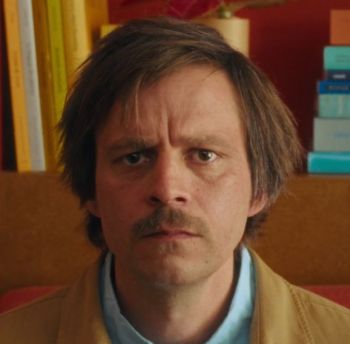
Are You a Human Being? Jimmy Conchou
perfectly conveys Jean-Michel's befuddlement upon discovering
that, all his life, he's been a robot. His demeanor reflects his
timid uncertainty in approaching his wife with this news. And then
his startling emotional (or emotionless?) transformation by film's
end.
The new Jean-Michel bears a confidant stance, speaking in a soft,
yet boldly matter-of-fact manner. He has accepted himself as is,
and his role a poet for the inevitable future of his kind.
He also retains a bit of our sympathy, which makes us queasily
complicit in his darkly satirical final act.
Jimmy Conchou
wins for Best Comedic Actor.
Warm
golden hues create a sense of serenity that belies the domestic
turmoils behind the happy facade at a Day of the Dead party. A
smoothly gliding camera reinforces this sense of familial calm
among the happy guests.
A flashback is told in black & white as the frame adjusts to a
square, narrowing to focus our attention on a secret about to be
revealed. Direct overhead shots emphasize key dramatic moments,
such as when Loreto pushes the poisoned coffee cup toward her
father. Back in the present, a rotating frame heralds the arrival
of a demonic presence.
Not Every Death Is Celebrated is
among the most beautifully photographed films in this year's
entries. It's also full of arresting compositions and creative
camera moves. But it's more than a purely visual delight; it all
aesthetically supports the film's supernatural story, unstable characters, and themes
of family turmoil.
Steve X
wins for Best Cinematography.
Ring
Ring is a supernatural journey. I'm still not sure of
whose; that of Lorenz, his mother, or possibly both? The film
opens with low, soothing, muffled sounds that suddenly louden and
clarify as Ophelia snaps Lorenz out of his reverie. Sound levels
continue to fluctuate throughout the film, as does the background
music.
Lorenz has his own theme music, which fades in and out amid
various background music, mostly oldies played on distant,
sometimes staticy radios. Ominous otherworldly noises herald the
supernatural. We hear the distorted voice of a ghost, the suddenly
jarring clamor of a phone or an accident, and an equally jarring
return to soothing sounds in safer conditions.
Ring Ring's dynamic use of sound
supports the events on screen, helping to instill humor, suspense, fear, shock, and mystery, until
culminating in a final moment of poignancy during the end credits.
Daniel Hernandez & Adrian Ramirez Leon win for Best Sound Design.
Jason
(Michael Zuccola) is plagued by surreal, techo-colored visions of
chotonic horror. Believing that these creatures are pursuing him,
he escapes to the home of his brother, Michael (Rosario Corso),
whose wife, Beth (Katrina Chamberlain), declares Jason to be a
junkie. She wants to call the cops. Michael assures Beth that
Jason is only sick. Then Beth tosses Jason's talisman out the door
-- the talisman that Jason insisted was keeping them safe -- and
we learn the truth about Jason's dark visions.
He's Sick offers no deep themes or
originality, just pure entertainment. A breathless thrill ride,
hurtling its horrors at a lightning pace. We only catch glimpses
of the monsters in Jason's imaginings and when they appear.
Surreal images of demonic semi-humans, maimed victims, bloody
worms, and assorted Luciferian detritus. It's all very
Hellraiser.
It's said that audiences are more frightened by what they don't
see but imagine, than by whatever a filmmaker can show them.
Others dispute this notion. The quick cut editing in
He's Sick strikes a neat balance. We
see enough of the underworld to frighten us, but not long enough
to get a good look. Our imaginations are sparked by glimpses,
forcing us to fill in the blanks with our own fears. All in the
context of a fast pace that never slackens or bores.
Jimmy Rudolph wins for Best Editing.
In
Living Dolls, both Dolly's home and
Dollman's "man cave" feature sparse, minimalist decor that
establish the film's surrealism. These sets also support the theme
of Dolly's desperate desire to fill that void with a husband's
love, and of Dollman's retreat into a dark empty bachelor pad, preferring
that to being smothered with Dolly's affections.
In pursuing these goals, the production design nicely
cooperates with the cinematography's wide shots (which exposes the
set's wide empty spaces), and the film's sparsely creepy music.
Carolina Rodrigues wins for Best
Production Design.
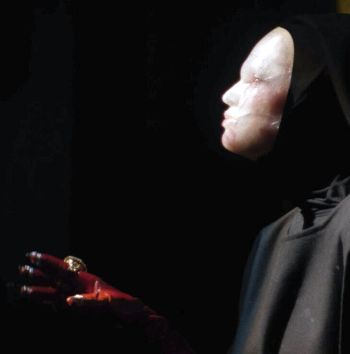
Amira
is a film with a monster. But because we only see his face at the
end of the film, revealing it to you now would be a spoiler.
Luckily, throughout most of the film, the monster wears a mask.
(Well, you would too if you looked like him.) But know that he's
hideous, in that cosmically queasy, Lovecraftian sense.
And the manner in which he punishes music students who fail to
perform Schubert to his high standards also leaves an unsettlingly
gory mess.
Arturo Balseiro
& Aliona Zazo
win for
Best Make-Up Effects.
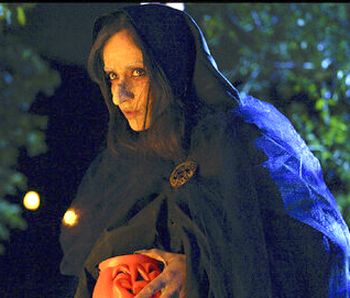
A
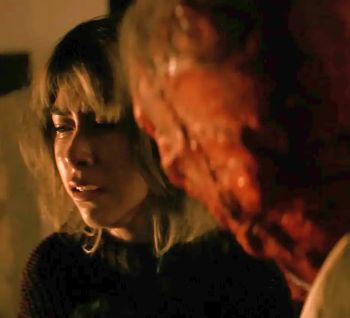
young woman (Florencia Chadwick) is spending a quiet Halloween
night alone, watching horror movies and eating candy. She hates
being interrupted by trick-or-treaters. When a witch (Vanesa Perez
Prieto) rings her doorbell, seeking treats, she mockingly throws
candy at the witch.
She might have been more polite had she known it was a real
witch on her doorstep.
There's little original about Trick or
Treat: A Halloween Story.
The
notion of tricks being played on shoddy treaters is an old idea.
Its strength lies in the
telling. Production values are excellent. Sets are colorfully lit
with gorgeous nighttime blues and Halloween oranges. Editing is
brisk, moving the story at a quick pace.
The witch is sensuously creepy. (That is, if you're into witches.) It was a good choice to have her
mutely croaking for candy rather than speaking clearly. And what
pretty young woman spends Halloween night alone, watching movies
and stuffing her face with candy, reminding herself to buy more
tomorrow? How does she stay so thin?
Well, she won't be thin after the witch's curse. Her comeuppance
is a visual treat, courtesy of Mariano Ayeredi.
Mariano Ayeredi
wins for Best Visual Effects.
The
music in Ding, Dong, Die! alternates
from quietly atmospheric, to tensely mounting suspense, to loudly
shocking, to fast-paced thrills.
But the Tabloid Witch has traditionally reserved this award not
for the best music, but for music that is best at aesthetically
supporting the characters, story and themes on screen.
Tommy Haynes's score does that. Unsurprising, as he describes his
film composer's philosophy on IMDB as if cribbed from our notes:
"Nothing is more important than supporting the narrative of
the picture as a story unfolds." (Not that he did crib our
notes; only that great minds think alike.)
Tommy Hynes
wins for Best Music Soundtrack.
* The Final Tally
* Best Horror Feature Film ...........................
Rui Martins (Ding, Dong, Die!)
* Best Horror Documentary ..........................
Aaron Matthew Migdon (Like
Michael)
* Best Dramatic Horror Short Film ................
Luis "Yayo" Angel Villa Meza (Not Every
Death Is Celebrated)
* Best Comedic Horror Short Film ................
Matthieu Moerlen (Are
You a Human Being?)
* Best Animated Horror Film ........................ Diogo Costa (The
Hunt)
* Best Avant-Garde Horror Film ...................
Dimitris Vrouvas & Carolina Rodrigues (Living
Dolls)
* Best Trash Horror Film ..............................
Danielle Francis
(Threefold)
* Best Horror Music Video ...........................
Mark Von Bismark (Stella
Tenebras)
* Best Dramatic Actress ..............................
Heather Lobban
(Ding, Dong, Die!)
* Best Dramatic Actor ..................................
Erwin Janke (Ring
Ring)
* Best Comedic Actress ...............................
Eleisha Rae Kennedy (Ring
Ring)
* Best Comedic Actor ..................................
Jimmy Conchou (Are
You a Human Being?)
* Best Cinematography ................................ Steve ??? (Not
Every Death Is Celebrated)
* Best Sound Design ....................................
Daniel Hernandez & Adrian Ramirez Leon (Ring
RIng
)
* Best Editing ................................................
Jimmy Rudolph (He's
Sick)
* Best Production Design
.............................. Carolina Rodrigues (Living
Dolls)
* Best Make-Up Effects ................................ Arturo
Balseiro, Aliona Zazo (Amira)
* Best Visual Effects
.....................................
Mariano Ayeredi (Trick
or Treat: A Halloween Story)
* Best Music Soundtrack .............................. Tommy Hynes (Ding,
Dong, Die!)
* Honorable Mention
.....................................
MC Pajares (The Awake)
* Honorable Mention .....................................
Jeremy Perry (Let's Fall Apart)
*
Honorable Mention .....................................
Lorena De Maddalena (We'll Be
Right Back)
"Hollywood Investigator" and
"HollywoodInvestigator.com" and "Tabloid
Witch" and "Tabloid
Witch Award" trademarks are currently unregistered, but pending
registration upon need for protection against improper use. The idea of
marketing these terms as a commodity is a protected idea under the
Lanham Act. 15 U.S.C. s 1114(1) (1994) (defining a trademark
infringement claim when the plaintiff has a registered mark); 15 U.S.C.
s 1125(a) (1994) (defining an action for unfair competition in the
context of trademark infringement when the plaintiff holds an
unregistered mark). All content is copyright by
HollywoodInvestigator.com unless otherwise noted.








.jpg)
.jpg)
.jpg)
 Of
the three lead female roles
Of
the three lead female roles 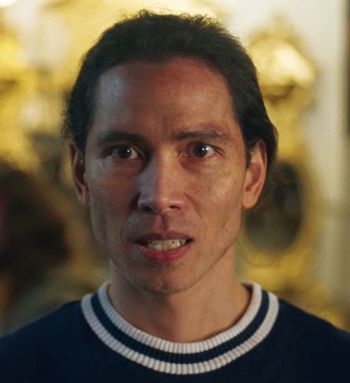 Ring
Ring
Ring
Ring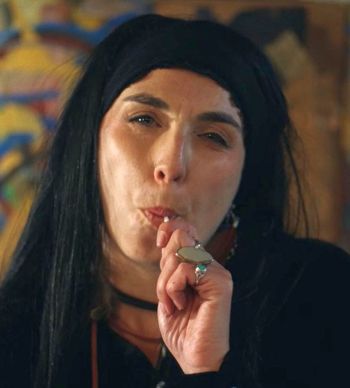 Although
  In
In
 Warm
golden hues create a sense of serenity that belies the domestic
turmoils behind the happy facade at a Day of the Dead party. A
smoothly gliding camera reinforces this sense of familial calm
among the happy guests.
Warm
golden hues create a sense of serenity that belies the domestic
turmoils behind the happy facade at a Day of the Dead party. A
smoothly gliding camera reinforces this sense of familial calm
among the happy guests. Ring
Ring
Ring
Ring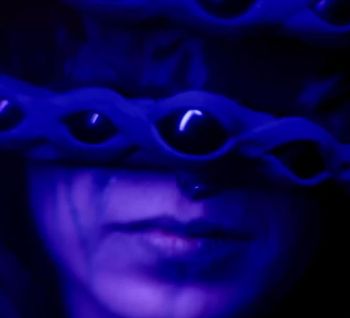 Jason
(Michael Zuccola) is plagued by surreal, techo-colored visions of
chotonic horror. Believing that these creatures are pursuing him,
he escapes to the home of his brother, Michael (Rosario Corso),
whose wife, Beth (Katrina Chamberlain), declares Jason to be a
junkie. She wants to call the cops. Michael assures Beth that
Jason is only sick. Then Beth tosses Jason's talisman out the door
-- the talisman that Jason insisted was keeping them safe -- and
we learn the truth about Jason's dark visions.
Jason
(Michael Zuccola) is plagued by surreal, techo-colored visions of
chotonic horror. Believing that these creatures are pursuing him,
he escapes to the home of his brother, Michael (Rosario Corso),
whose wife, Beth (Katrina Chamberlain), declares Jason to be a
junkie. She wants to call the cops. Michael assures Beth that
Jason is only sick. Then Beth tosses Jason's talisman out the door
-- the talisman that Jason insisted was keeping them safe -- and
we learn the truth about Jason's dark visions.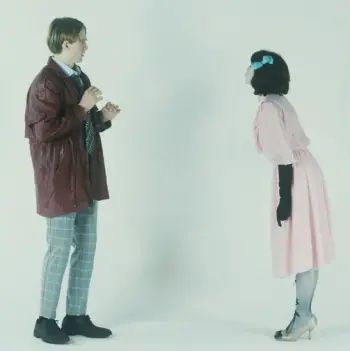 In
In
 A
young woman (Florencia Chadwick) is spending a quiet Halloween
night alone, watching horror movies and eating candy. She hates
being interrupted by trick-or-treaters. When a witch (Vanesa Perez
Prieto) rings her doorbell, seeking treats, she mockingly throws
candy at the witch.
A
young woman (Florencia Chadwick) is spending a quiet Halloween
night alone, watching horror movies and eating candy. She hates
being interrupted by trick-or-treaters. When a witch (Vanesa Perez
Prieto) rings her doorbell, seeking treats, she mockingly throws
candy at the witch.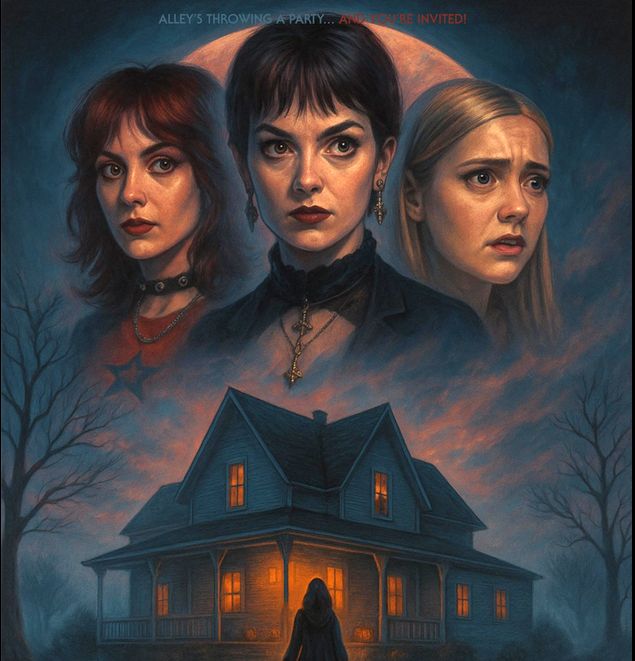 The
music in
The
music in